
Calls grow for release of 95-Year-Old Shincheonji leader
Calls for the release of 95-year-old Shincheonji Church of Jesus leader Lee Man-hee are growing, with human rights activists and scholars urging the South Korean Government to reconsider his continued detention.
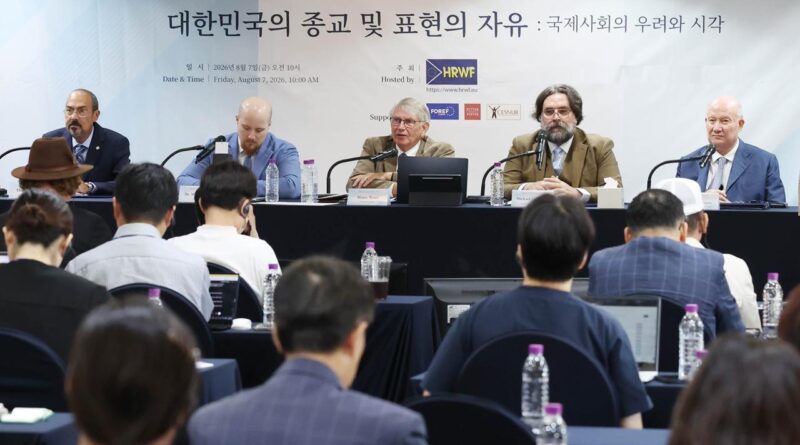
The latest appeal comes from a group of European scholars and human rights activists who visited South Korea and met with Chairman Lee Man-hee and related officials on August 6.
Three members of the group met Lee at his place of detention, according to a statement issued in Seoul on August 7. The group says some of its members have studied Shincheonji for many years, including conducting interviews with Lee and researching the movement’s international missionary activities.
The appeal comes days after the Coordination des Associations et des Particuliers pour la Liberté de Conscience (CAP-LC), an NGO in special consultative status with the United Nations, submitted a written statement to the UN Human Rights Council expressing concern over Lee’s detention.
CAP-LC said the case raises questions about the treatment of elderly defendants, freedom of religion or belief and the interpretation of constitutional principles.
Lee, who is 95, is being detained in connection with allegations relating to the political participation of members of his religious community.
The European scholars and activists said South Korean legislation concerning the political participation of clergy is among the most restrictive in the world and questioned whether such restrictions are compatible with international norms protecting the right of believers to participate in political life.
They also expressed concern about how Shincheonji is portrayed in the Korean media.
According to their statement, descriptions of the church as a “cult” often rely on accounts from religious opponents who describe it as “heresy”, while academic research on the movement receives less attention.
The group stressed that it respects South Korea’s democratic institutions and does not seek to interfere with the country’s justice system.
However, it argues that Lee’s advanced age makes his continued pre-trial detention a matter of humanitarian concern.
“Chairman Lee is ninety-five years old,” the group states, arguing that in the European Union, pre-trial detention of older defendants is regarded as an exceptional measure. It says that in comparable cases, house arrest may be used instead.
CAP-LC has similarly raised concerns about Lee’s age and vulnerability, saying international human rights standards require pre-trial detention to be used only when strictly necessary and that the circumstances of elderly defendants should be taken into account.
The organisation also questioned comments attributed to South Korea’s Minister of Justice, who reportedly described criminal punishment of Lee as the “inevitable” consequence of his being a “false prophet”.
CAP-LC said such comments, made while investigations were still ongoing, risk undermining the presumption of innocence and could affect public perceptions of a case that had not yet been adjudicated.
The activists and scholars have now gone further, calling for Lee’s immediate release from custody so that he can face trial without being detained.
“For humanitarian reasons,” they said, their request is based on international principles protecting older defendants and standards including the Mandela Rules.
The statement was signed by Hans Noot, Associate Director of Human Rights Without Frontiers; Professor Massimo Introvigne, Managing Director and Editor-in Chief of CESNUR and Bitter Winter; Thierry Valle, President of CAP-LC; Michael Langhans, Executive Director of FOREF Germany; and Dr Mark Nemes, Deputy Director of CESNUR.
CAP-LC has separately urged the South Korean Government to review the necessity of Lee’s continued detention in light of his age, health and the nature of the allegations.
It has also called for judicial proceedings to respect the presumption of innocence and for public authorities to avoid statements that could compromise the appearance of impartiality.
The issue is now before the wider international human rights discussion, with the Human Rights Council’s upcoming 63rd session scheduled to consider human rights situations requiring the Council’s attention.